Experience Shaped Expertise, Focused on Your Success.
From diverse industries to innovative business models, these projects are where I built what I offer today: growth for eCommerce and SaaS, driven by data science, marketing and development, and backed by years of hands on experience. Follow the line: every employer, every project, one career. While NDAs keep some successes under wraps, let us connect! I would love to share insights from projects that could transform your business.
Spin me. Every dot is a client: click it to jump to the project.
Germany2005 to 2006via IVM Consultants, on behalf of Siemens AGwith Adicom
Before the 2006 World Cup in Germany, the brand new Allianz Arena needed to know, at any second, exactly how many people were inside. I was responsible for capturing entries and exits through every single door of the stadium: live attendance, measured continuously against the permitted capacity. That meant server administration on the ground and customising the counting software together with Adicom, all delivered on behalf of Siemens AG through IVM Consultants. The deadline was the World Cup itself, and a World Cup does not move for anybody.
Why it matters today
This was my first taste of what I offer today: real time data capture at serious scale, dashboards that matter because a legal limit sits behind the number, and shipping against a deadline that cannot slip. When I build tracking and data science systems for shops and platforms now, it is the same discipline, just with revenue instead of turnstiles.
Austria2005 to 2006via IVM Consultantswith Adicomalongside the Allianz Arena project
While the Allianz Arena project was running (IVM was my employer, leasing me to Siemens), I was also working for PC Electric in Austria. I customised their Fertigungsleitstand, the production control centre, again developed by Adicom, and built their own custom BDE, a shop floor data capture system with a quality assurance feature: produced items were batch controlled through sampling, and I was responsible for developing that entire QA cycle on top of tracking the quantities produced. Materials used were fed back automatically, and reordering from suppliers was triggered before parts ran out, which meant a serious amount of supply chain management and the calculations behind it. The system also tracked people, sick days and holidays, so production could be planned properly and bottlenecks spotted and dealt with. Server administration on Linux and Unix included.
Why it matters today
A factory floor taught me that operations are a data pipeline with people in it. The automated reordering logic lives on in the subscription forecasting and stock thinking I build into shops today; the QA cycle became my insistence on test driven releases; and planning production around real human capacity is exactly what my growth simulator does now, just for a services business instead of a production hall.
United Kingdom2007 to 2009Documentum: Webtop, Administrator, DAMEMEA Employee of the Quarter 2009
In September 2006 I moved to the UK, and I never left. By day I was dedicated support for EMC’s Documentum, specialising in Webtop, Documentum Administrator and DAM, looking after enterprise clients like Volvo Group, Lufthansa and BASF. By night I was at Kingston University reading International Business with Chinese Mandarin as my elective, funding the degree with the day job. For two and a half years I barely set foot in a lecture: I showed up for presentations and exams, spent my nights in the library, studied at weekends instead of socialising, delivered group assignments alone because I could not pick a group, and used every day of EMC holiday for revision instead of going home to Austria. It ended with a First Class Honours. At EMC it ended with the EMEA Employee of the Quarter award for going above and beyond: I fixed a string of significant issues that had Volvo close to walking away, convinced them to stay, showed them what the suite could really do, and helped the sales team turn a near loss into additional business.
Why it matters today
Everything I offer today rests on what those three years proved: enterprise grade support discipline, retention through competence rather than charm, and the stamina to deliver two full time workloads at once. When I say a client of mine never gets left alone with a problem, Volvo is why I mean it.
Sweden2007 to 2009via EMCDocumentum Webtopfixes shipped into the product
Volvo Group ran its engineering and corporate documentation on Documentum, with Webtop as the interface thousands of users lived in every day. My scope was keeping that front end dependable at scale: workflow and lifecycle behaviour that had drifted from what the business needed, performance that degraded as repositories grew, and customisations that broke under upgrades. I sat directly between the client and EMC engineering, reproduced the issues, and produced fixes myself, which were passed to engineering for inclusion in the current code base and validation. A string of those issues had Volvo close to leaving EMC altogether; resolving them is what turned the account around.
Why it matters today
Volvo taught me the job I still do: being the one person who speaks both languages, the client’s and the engineers’, and who fixes rather than escalates. It is why my clients today get patches and answers, not ticket numbers.
Germany2007 to 2009via EMCDocumentum Administratorupgrades and migrations
For Lufthansa the work sat on the administration side of Documentum: large repositories carrying operational and compliance documentation, where an outage or a botched change is not an inconvenience but a process stoppage. Through Documentum Administrator I supported the health of those repositories: user, group and permission structures across divisions, jobs and methods that had to run on schedule, and the delicate business of upgrades and content migrations without losing a single audit trail. Here too I worked with the client and with engineering, and where the product itself was at fault I produced the fixes myself and handed them to engineering for inclusion in the code base and validation.
Why it matters today
Aviation grade tolerance for error is a useful habit. It is where my migration discipline comes from, the same one behind the migration brackets I offer today: counts reconciled, audit trails intact, cutover only when everything proves out.
Germany2007 to 2009via EMCDocumentum DAMrenditions and metadata
BASF was the DAM side of my Documentum world: a global company’s brand, product and technical imagery managed as digital assets, with everything that entails: ingest pipelines that had to accept what agencies delivered, rendition and transformation chains that failed quietly until somebody needed the missing format, and metadata models that decided whether an asset could ever be found again. I supported all of it, working with the client’s teams and EMC engineering alike, and as with my other accounts I produced fixes myself that were passed to engineering for inclusion in the current code base and validation.
Why it matters today
DAM is where I learned that content is structured data with pictures attached. That thinking runs straight into what I build today: the generated imagery pipelines behind my demo shops, and Smart Websites, where clients manage their content through AI instead of wrestling a CMS.
United Kingdom2009 to 2011support processes and ticketingfrom support into web development
ECS hired me into their support department to create and optimise the processes around ticketing and assigning issues to engineering. Running a support desk was not exactly what I had in mind for my career, but it turned out to be the perfect vantage point: I saw every way a web platform can fail, and instead of only routing tickets I started fixing issues myself. It was my first real step into repairing live web applications and understanding what clients actually need. The systems underneath were built with the best intentions, and the world back then ran on PHP based CMS platforms: Drupal, WordPress, Joomla and friends. Fixing them daily taught me their weaknesses from the inside: a serious cyber security exposure patched on a never ending treadmill, advanced functionality that took ages to assemble, barely any reusability, content tangled up with presentation, and code that grew messier and unnecessarily complex with every plugin bolted on.
Why it matters today
I knew there had to be better ways, so while fixing PHP by day I taught myself proper object oriented development by night: Python to build with Django, and Ruby to write Ruby on Rails, the rapid development frameworks that would become my home. What I could not know yet was how handy Python would become years later, when growing companies through data science turned into my daily work. Slowly but surely, things fell into place: every conviction behind Smart Websites started here, in a support queue full of broken CMS installs.
United Kingdom2009 to 2011Drupal (PHP)a world heritage content estate
Some clients you never forget. The Royal Botanic Gardens, Kew, a UNESCO World Heritage site and one of the great scientific institutions of the world, ran their web presence on Drupal, the archetypal PHP CMS of that era. Through ECS I helped support and fix it, and Kew showed me what happens when a genuinely content rich organisation, botanical science, vast collections, visitor information, events and education, has to squeeze itself through a module ecosystem. Every new requirement meant another module, every module another update cycle, another security patch, another chance for two plugins to disagree, and the editors who simply wanted to publish their science ended up working around the system instead of with it.
Why it matters today
Kew is where the lessons from the ECS support queue turned concrete. An institution like that deserves a platform shaped around its content, not content forced into a platform. That is exactly the thinking behind Smart Websites: built on Ruby on Rails, content held as structured data instead of trapped in modules, and pages that show what the visitor is actually looking for. The organisations with the richest stories to tell are the ones a template CMS punishes hardest, and Kew taught me that early.
United Kingdom2009 to 2011high street retail at scalethe case for Solidus
New Look is high street fashion at proper scale: thousands of products, relentless campaigns, and a web presence that has to keep up with both. Through ECS I supported their web platform, which meant taking requirements from merchandising and marketing people who think in collections and cut off dates, not in tickets, and turning them into working software. It was my first close contact with ecommerce at retail scale, and with what happens to a platform when the business moves faster than the technology underneath it.
Why it matters today
Today New Look’s ecommerce runs on SAP Commerce Cloud, and that route, the classic enterprise suite, is exactly the comparison I put in front of retailers now. The suite means licence fees that recur forever, certified consultants for every change, heavy infrastructure overhead, release cycles measured in quarters, and customisation that ends where the vendor’s roadmap ends, on code you will never truly own. Solidus, the open source ecommerce framework I build on today, is the opposite deal: built on Ruby on Rails, every line of code owned by you, every feature customisable, and your budget goes into building your advantage instead of renting somebody else’s.
United Kingdom2011 to 2012Head of Customer RelationsDigital Asset Managementthe final step before my own company
Brandworkz builds something quietly genius: complete brand consistency for multinational companies. At its heart sits a Digital Asset Management platform where a brand keeps its approved images and logos. When a country team creates an advert for web or print, they work from a template that permits only the assets approved for exactly that piece. Mistakes become impossible, off brand imagery and rogue logos simply cannot happen, yet every market stays free to localise the messaging, the words on the artwork. The finished piece goes straight to the printer or directly onto the web. As Head of Customer Relations I sat between this product and the brands using it, and it taught me product management properly: identifying our customers’ pain points, and just as importantly, the pain points of their customers. I am not at liberty to talk about the technology itself, but the marketing automation side of it fascinated me endlessly.
Why it matters today
Brandworkz added marketing and a real understanding of branding to my development repertoire, and that was the final piece. I left with a winning formula in mind and founded my own company. What fascinated me there, approved building blocks, templates with freedom in exactly the right places, artwork flowing straight to its channel, lives on in everything I build today: tailored to a client’s Solidus store and SaaS platform, with the marketing built in and driven by data science. That completes the ecosystem.
New Zealand2011 to 2012via Brandworkzbrand consistency at scale
Icebreaker makes outdoor clothing from New Zealand merino wool, and they were early to something the whole industry later copied: selling provenance, the story of the high country sheep stations the wool comes from, not just the garment. A brand like that lives or dies on consistency, the same story told the same way in every market and every season. Through Brandworkz I worked with brands facing exactly this challenge: guidelines, approved photography and campaign assets in one governed place, so every market builds on brand and localises only the words. I am not at liberty to talk about the technology behind it, but the lesson has never left me: strong brands are systems, not folders full of logos.
Why it matters today
Today that thinking is designed into every Solidus store I build: product imagery, campaign templates and content blocks that keep the shop unmistakably on brand, while every campaign stays free to speak to its own audience.
United Kingdom2011 to 2012via Brandworkzgovernance and approval at national scale
The British Army is one of the most recognisable institutions in the country, and behind it sits a communications operation of enormous scale: recruitment campaigns, regimental materials, events, print and web, produced by many hands across many units. An organisation built on discipline expects the same from its brand: every piece correct, every crest and every photograph approved, no exceptions. Working around Brandworkz taught me what governance at that scale really means, templates and approval workflows that make the wrong thing impossible while keeping the people closest to the audience able to do their work quickly. I am not at liberty to talk about the technology itself, and with this client that is exactly as it should be.
Why it matters today
That discipline shows up today in every SaaS admin I build: roles and permissions, approval steps where they protect the organisation, and freedom everywhere else. Regios and its audit trail is the direct descendant of that lesson.
Canada2011 to 2012via Brandworkzone brand, many markets and languages
Destination Canada is the country’s national tourism organisation: their job is to sell Canada itself, its wilderness, its cities and its people, to the whole world. That means one brand speaking dozens of markets and languages at once, with partners and provinces all producing their own campaigns. The photography is the crown jewel, and it has to stay pristine: approved imagery, correct usage, everywhere. Around Brandworkz I learned how such an organisation stays coherent: shared templates carrying the approved assets, while each market localises the message for its own audience, English, French and far beyond. I am not at liberty to talk about the technology itself, but the shape of the problem, one brand, many voices, has stayed with me ever since.
Why it matters today
One brand, many voices is exactly what my bilingual Smart Websites solve today: content held as structured data, shared templates, and messaging that adapts to each market and each visitor without the brand ever drifting.
United Kingdom2011 to 2012via Brandworkzartwork straight to print and web
JLL is one of the largest commercial real estate firms in the world, with offices in dozens of countries and agents producing property marketing every single day: window cards, brochures, portal listings, campaigns. The volume is relentless, and every piece has to look like JLL, whether it is produced in London or anywhere else. Around Brandworkz I saw what solves this: per office templates that lock the brand and the approved assets, let the local team change exactly what they should, the property, the price, the words, and send the finished artwork straight to the printer or the web. No agency round trips, no waiting, no rogue layouts. I am not at liberty to talk about the technology itself, but the automation of it, artwork flowing from template to channel without a human bottleneck, is the part that captured me.
Why it matters today
That automation runs in my own tools today: my banner studio generates campaign artwork from templates and approved assets in every format at once, and the same thinking drives the automated marketing I build into client platforms. Campaigns as a system, not a bottleneck.
United KingdomHubSpot CMSthe project that inspired Smart Websites
Not every valuable project is a triumph, and I would rather tell you about this one honestly. At Pi-Top I worked with the amazing Sarah and Gemma, with Gemma I work happily to this day, putting together their website on the HubSpot CMS. The people were brilliant; the platform was the lesson. A static, inflexible CMS leaves precious little room for the work I actually care about: automated marketing, properly optimised tracking, content that adapts to the visitor. I suggested moving towards what I now call a smart website; the timing was not right, and with growth boxed in by the template walls, I did the professional thing: supported their new CMS manager through settling in, handed over cleanly, and moved on.
Why it matters today
Pi-Top is the project that sharpened my Smart Websites concept more than any success could have. Every frustration with that CMS became a design decision in what I build today on Ruby on Rails: content as data, tracking built in, marketing automated, no template ceiling. And the best proof that the engagement was worth it: the working relationships outlived the platform.
The nicest compliment in this business is being asked back. Sarah, whom I had worked with at Pi-Top, brought me into Adverity, the Viennese marketing data platform, to help on the design side: taking the designs being created and making sure every one of them translated into reusable drag and drop modules for the HubSpot CMS page editor. That is design system discipline in miniature: grids that hold, components that snap together, and building blocks a marketer can rearrange freely without ever breaking the brand. A focused engagement, done properly, for a team that knew exactly what it needed.
Why it matters today
Two things stayed with me. The modular thinking, content as building blocks that non developers can compose, sits at the very heart of my Smart Websites concept, only built on Ruby on Rails, with content that shows itself depending on the visitor’s intent instead of sitting frozen in a template editor. And the deeper lesson: when people carry you from one project to the next, that is worth more than any case study.
Austriafirst custom CMS on Ruby on Railsevent driven trackingAPI for the MyComfort app
Everything I build today has a birthplace, and it is a heating manufacturer in Seekirchen. For Windhager Zentralheizung, now part of BHT Best Heating Technology, I built their own CMS for the first time, on Ruby on Rails, a rapid development framework where every last piece was customised to how they actually work instead of how a template vendor imagined it. The tracking strategy was driven through events, so audiences were built properly and performance marketing could finally run data driven rather than on hunches. The design was optimised, of course, but the design was only half the point. Underneath, this was never just a website: it was half website, half SaaS, complete with an API built to connect it to their MyComfort app. Dynamic content depending on the visitor, conversion rate optimisation as a discipline, numbers you can act on.
Why it matters today
This is the absolute starting point of everything I offer today. Windhager showed me what a rapid framework makes possible when you treat a website as a platform: content that adapts to the visitor, tracking designed before the first page ships, and marketing automation fed by data science through the numbers the platform itself delivers. Follow the line from this project and you arrive directly at Smart Websites and Growth Plus.
For Auto Prammer, an Austrian dealership with rentals and a workshop, I built the whole operation into one platform on Ruby on Rails and Solidus. Car sales with smart filters, purchase enquiries, trade ins, test drives and financing leads; rental bookings with dynamic pricing, an availability calendar, automated contracts and review requests; the garage with online booking, mechanic assignment, replacement cars and Pickerl reminders; promotions, seasonal pricing and branded PDF gift vouchers with QR codes and Stripe payment; and one admin dashboard with a daily task list and Google Calendar sync that needs no training. Over fifty automated email templates carry every workflow, and the vehicle stock feeds Google, Meta and TikTok vehicle ads directly.
Why it matters today
Auto Prammer became the blueprint for my dealership platform offer: not off the shelf software, but a business digitised the way it actually works, ready in weeks and owned by the client, with no monthly licence fees.
“I sell the cars, and the platform sells with me. Every vehicle is online in minutes with financing and trade in right in the listing, and the marketing machine behind it brings buyers from far beyond our region. I see which ad brought which enquiry and what a sold car cost us in marketing. That used to be gut feeling.”
Klaus Heiligenbrunner
Managing Director & Partner, Auto Prammer
“Customers book their workshop appointments online, at ten in the evening if they like, and the garage calendar fills itself. My team stands at the cars instead of hanging on the phone, and because reminders go out automatically, missed appointments have practically disappeared. The system was built around how our workshop actually runs, not the other way round.”
Paul Prammer
Managing Director & Partner, Auto Prammer
“Rentals, contracts, enquiries and the whole day to day used to live in five lists and a paper calendar. Now it all runs in one system: I see every booking, every car and every customer in one place, and nothing slips through any more. Honestly, I would not want to go back.”
China2022 to todaySolidus + SaaS for manufacturersname withheld at the client’s request
Shenzhen is where the world’s consumer electronics are actually made, and since 2022 I have been building the commerce backbone for one of its manufacturers. The name stays confidential, and this story appears here in exactly the shape the client asked for: the services, not the secrets. The problem is one every manufacturer knows by heart. Between the factory, consumer electronics, PCBA, ODM and white label production, and the person finally unboxing the product sits a long chain of middlemen, and every link in that chain used to mean another spreadsheet, another price list, another slice of margin quietly lost. I built a Solidus platform customised for manufacturing: one catalogue that serves manufacturer, distributors and end customers at the same time, each seeing their own products, their own prices, their own terms. Around it runs a family of SaaS applications for admin, marketing and customer management, and underneath, data science does the quiet work: which products move, which channel deserves attention, which customer is about to reorder, and which is about to drift away.
Why it matters today
This engagement is my entire offer working as one system: Solidus shaped around how manufacturers really sell, SaaS development for everything operational around it, and data science turning the numbers the platform produces into decisions. When manufacturer, middleman and end customer finally trade on one platform, selling stops being a chain of hand offs and becomes one connected machine. That is what I build, and this client has trusted me with it for years.
“Our business runs on the relationships between the factory, our partners and the people who buy our products, and Georg built the platform where those relationships finally meet. Distributors order on their own terms, end customers see a proper shop, and my team manages all of it from one place. He understands manufacturing, which is rare, and the numbers his systems deliver shape our decisions every single week. We asked him to keep our name out of it, and he did. That discretion is exactly why we keep him close.”
Lucy C.
Head of Digital Commerce, Electronics manufacturer, Shenzhen
Austriaenergy cooperativedevelopment, data and marketing in one person
Regios is an energy cooperative in Austria’s Mühlviertel: citizens, companies and communities jointly owning regional green power. When I arrived, members lived in a Microsoft Access database. Today the Regios Hub, a custom Ruby on Rails platform I built and run, is the central system for members, organisations, applications, events and appointments; new Genossenschafter sign up digitally with qualified signatures; the brand new website is live at regios.at; marketing is measured cookieless first; and the DSGVO is treated as a feature, not an obstacle. Regios wanted momentum rather than a supplier per discipline, so one person carries the development, the data work and the performance marketing, and the same person answers for the results of all three.
Why it matters today
Regios is my proof that digitalisation done right transforms an organisation, not just a website. It is the model client for what I offer: one accountable person, three disciplines, numbers a Vorstand can trust.
“Every board knows the horror stories: digitalisation projects that eat two years and a fortune and then quietly die. We experienced the opposite. Within weeks we had working software solving real problems, and every month since has added something the team actually uses. One person who understands technology, data and marketing means decisions take a conversation, not a steering committee.”
Norbert Miesenberger
Board Member, Regios
“My biggest worry was dependency. Custom software sounds like marrying a single developer and hoping for the best. The opposite happened: the system is documented, tested and built on Ruby on Rails, a framework any capable developer can take over. The code belongs to us, every process is written down, and the audit trail convinces our auditors before they finish asking. That is what ownership feels like.”
Christian Neufeld
Board Member, Regios
“I used to send forms, wait for the post, chase signatures and lose interested people along the way. Now someone decides to join at eight in the evening and by ten past eight they have signed digitally, with everything checked and correct. Nothing gets lost anymore, my follow ups sit on a list with deadlines instead of in my head, and I spend my time talking to people instead of shuffling paper.”
Julia Landl
Sales, Regios
“I was the person who knew where everything was, which sounds nice until you want a holiday. Today the answer to almost every question is in the Hub: who is a member, what they hold, what was sent and when. The routine work that used to fill my days simply happens by itself, and when someone needs a document I click once instead of digging through folders.”
Gottlinde Reithmayr
Assistant, Regios
“Accountants dream of systems where the numbers simply agree, and this is the first one I have worked with where they do. Payment references match contract numbers, every share and loan carries its complete history, and nothing depends on somebody remembering to update a spreadsheet. Month end used to be detective work. Now it is a report.”
Nina Winkler
Accountant, Regios
“I have managed enough IT projects to expect delays, surprises and invoices for both. This one ran differently: we discussed a feature, days later it was live, tested and documented, and it did what we agreed. When something needed changing, we changed it the same week. No tickets vanishing into an agency backlog, no translation layer between us and the person writing the code. That speed changes what you dare to plan.”
Simon Klambauer
Project Manager, Regios
“Marketing used to mean doing sensible things and hoping. Now every campaign reports what a genuinely won member costs, the measurement respects people who decline tracking, and we A/B test instead of debating. Our events fill through automated invitation flows that politely follow up by themselves. I finally argue with numbers instead of feelings, and the budget goes where the evidence points.”
United Kingdomstartupsmart website + dashboard + data layer
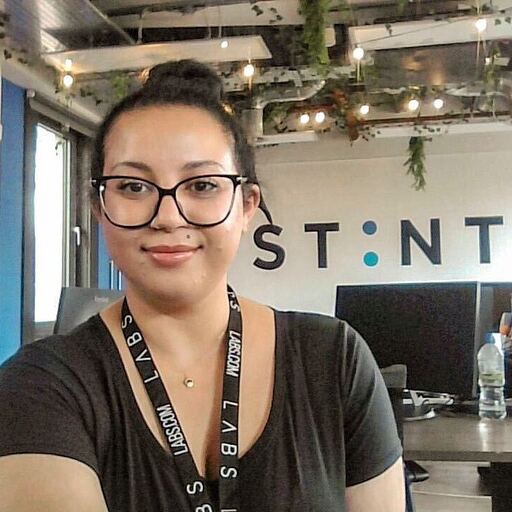
For Stint, a London startup, I build the growth machine: a smart website and an operations dashboard working as one product, with a performance data layer powered by GrowCentric.ai underneath. One hundred percent custom code, three ad platforms, Meta, Google and TikTok, synced into a single view, every website event fired to four analytics destinations, and the whole journey tracked end to end, from ad click to hired. It is what I mean by development with growth hacking: engineering that ships real product, combined with data science that turns every click, application and ad pound into something the team can learn from, with exact conversion figures and cost per applicant live rather than in a PDF at the end of the month.
Why it matters today
Stint shows the full modern stack in production: smart website, custom dashboard, GrowCentric data layer. It is the working example of what a startup gets when it hires me instead of an agency retainer.
“The application forms and the screening pipeline were built around how my team actually works. Every application lands in one place, and because the forms are tied into marketing we know exactly what an accepted applicant costs us. That used to be guesswork.”
Sara Rida
Screening Team Lead, Stint
“I have worked with Georg for years, first handing over designs he turned into our live website, now leading brand and a growing team. I bring the requirements, he comes back with a plan, honest advice on the technical side and a working product. That rhythm is a big part of what lets us grow.”
Gemma Kindness
Brand Lead, Stint
“Attribution across Meta, Google and TikTok finally agrees with reality, and the A/B lab tells me when a result is real rather than noise. The newest part is my favourite: the dashboard builds our retargeting and lookalike seed audiences automatically and pushes them to all three platforms.”
United KingdomGrowth Plus engagementname withheld at the client’s request
One of the projects I am proudest of is one I am not allowed to name. A major department store in the UK has me managing their ecommerce and online platform, and they would rather their competitors did not know who builds their advantage. Fair enough: the work can speak while the name stays theirs. The scope is the full Growth Plus stack: an online platform carrying thousands of products across departments, kept fast, merchandised and measurable; data science running underneath it, from demand forecasting and markdown analytics to attribution modelling that says which channel actually earned each sale; marketing automation that turns browsing behaviour into lifecycle campaigns instead of newsletters into the void; and SaaS backend development, the internal tooling, integrations and data feeds that let a large retail operation move like a small one.
Why it matters today
This is not a story about the past connecting to today. This is today: every service on my list, running together at serious retail scale, for a client whose competitors are precisely why they keep me quiet.
United Kingdom2025 to todaymy own productmachine learning for ecommerce
GrowCentric.ai is my own product: ten years of ecommerce data work distilled into one platform. Shops fly blind on competitor prices, spread ad budget by gut feeling and treat forecasts as hopeful guesses; GrowCentric replaces the pile of custom scripts, the graveyard of spreadsheets and the handful of expensive specialists that usually patch those problems in isolation. Machine learning handles pricing and ad budget optimisation to under five percent error margin, weighs more than forty five factors for budget allocation, applies forecasting models per brand and product type, and runs A/B tests to a ninety five percent confidence threshold. The tedious work happens in the machine; the merchant gets on with running the shop.
Why it matters today
GrowCentric is the data science layer under my client work: the same engine that powers the platforms I build, productised. When I promise measurable growth, this is the machinery behind the promise.
The next box on this line is empty on purpose. Whatever you are building, a shop, a platform, a website that finally works for you, every experience above goes into it. We start with the free workshop: your plan, honest numbers, and you keep it whatever you decide.
What I bring
Growth Plus (Digitalisierung)Ecommerce (Solidus)SaaS & web appsSmart WebsitesData sciencePerformance marketingTask outsourcing