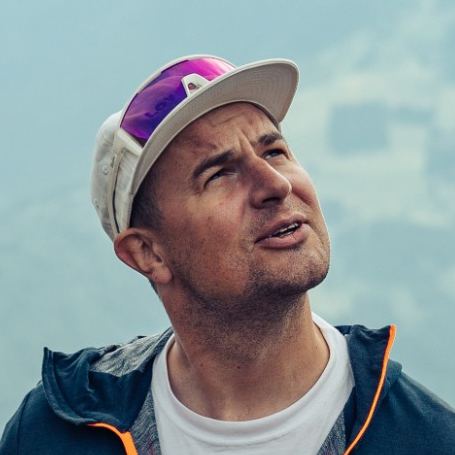

Every project gives 1% to someone who needs it more.
From the day we start working together, 1% of everything your project pays is earmarked for a UK registered charity. You pick which one during onboarding, from the curated list below, and every three months the donation goes out. It is a donation, full stop: no sponsorship, no logo swaps, no advertising, no strings. The charity gets the money, you get a copy of the receipt, and that is the whole deal.
The story behind it
Why these causes. The honest version.
For a long time this page said the causes were "close to me personally" and left it there. That reads like something a marketing person wrote to make me look kind. So here is the truth, as much of it as belongs on a website: I know every cause on this list from the inside.
The short version: some years ago my life fell apart in almost every way a life can, and it took years, the right help and one extraordinary friend to build it back. Work was a central part of that recovery: something to hold on to, somewhere to be useful. For that I am thankful to my amazing clients; without them I would not have made it this far. And there is a silver lining: because work carried me, I poured everything into it, and that made me excellent at what I offer, whether that is data science, development or growing businesses through digitalisation done right. I am back on top, prouder of that climb than of anything else on this website, and finally in a position to give back. The chapters below tell it properly. Read them, or go straight to the list: both are fine with me.
Straight to the list ↓01 · Where it starts
The night the help did not come
Years ago I became the victim of a serious crime. What should have followed was help. What followed instead was silence: a police force that did not believe me, friends who quietly stepped away, and a system with no script for someone in my situation. I learned in one winter how fast a full life can empty out.
Why this is on the list · ASSIST Trauma Care
Trauma does the most damage when nobody believes you and nobody treats you. ASSIST Trauma Care gives people evidence based therapy after the worst day of their life, without a years long queue. I waited years. Nobody should.
See the list below ↓02 · No fixed address
The waiting room where I did not count
For a while I had no home. I sat in a council office and asked for emergency housing, and was told there was nothing for someone in my situation that night. The rules had their reasons. I can only tell you what it does to a person to stand on the wrong side of them with nowhere to go.
Why this is on the list · Glass Door Homeless Charity
Glass Door runs open access night shelters with caseworkers: no referral, no gatekeeping, a bed and a person who asks your name. Open access is the whole point. It is the door that was not there for me.
See the list below ↓03 · Half past two in the morning
Two words: "Send location."
At my lowest point I was done. I went through my contacts and there was one number I dared to write to. Tati: a friend of a dear friend, we had met for two days four years earlier and never spoken since. At half past two in the morning I sent her three words: "I can’t anymore." She answered with two: "Send location." She came, she stayed, and she saved my life. She nursed me back to strength over months, and today she is one of my best friends.
Most people in that moment do not have a Tati. These two charities are a Tati for strangers: one gets men in suicidal crisis into fast, face to face therapy, the other looks after the people left behind when no message arrived in time.
If tonight is that night for you: Samaritans, 116 123, free, from any phone, at any hour.
Why this is on the list · James’ Place · Suicide&Co
James’ Place, for the man at half past two. Suicide&Co, for the families where nobody answered. Both are on the list because one message decided whether I would be here.
See the list below ↓04 · The wrong help
Years of treatment for the wrong thing
When help finally came, it was the wrong kind. For years the treatment I was given dealt with the surface and missed the cause, with medication I should never have been given. The pills numbed the pain and switched the emotions off, and that is all they did: the actual wound stayed exactly where it was, just quieter. Years of that ended in a dependency I then had to beat on top of everything else. I did beat it, and it is the hardest thing I have ever done. Underneath it all sat untreated PTSD, because finding the right door in the system is a full time job you are expected to do at your weakest. When I finally reached real trauma therapy, it worked. It should not have taken years.
Why this is on the list · Chasing the Stigma
Chasing the Stigma built the Hub of Hope so that the right door is one search away instead of years away. If it had existed for me back then, half of this chapter would not have happened.
See the list below ↓05 · The way back
The people I met on the way up
The way back was long: therapy, work, structure, and a handful of people who helped without asking for a CV of my wounds. It ran through waiting rooms, group sessions and shelters, and in those rooms I met many people carrying criminal convictions. I sat there for my own chapters of this story; they sat there for theirs. And I listened. In this country a conviction works like a life sentence: it follows every job application, every insurance form, every rental contract. People who served their time and want to work often cannot, so some go back to crime simply to survive, and are then judged by the same society that took their second chance away. I have heard who these people actually are. They deserve better maths.
Why this is on the list · Unlock
Unlock runs the helpline for people with criminal records: jobs, housing, insurance, the practical walls. Rehabilitation you are not allowed to use is not rehabilitation.
See the list below ↓06 · Why one percent
Not generosity. A debt.
So no, the pledge is not a marketing idea, and I am not a saint. I am a former case. Every cause on the list below is a chapter of this story: trauma care, a shelter bed, a crisis room for men, support for the bereaved, the right door found early, and a fair shot for the people who never get one. The 1% is me sending something back down the rope I climbed up on. Quarterly, receipted, whether it wins me a client or not.
Why these causes
Mental health and trauma, men’s mental health, the rehabilitation of offenders, homelessness and suicide prevention. No marketing consultant picked these for me. You have just read where each one comes from: every cause on this list is a chapter of the story above, and that is the only vetting process it ever went through.
Why small charities
Every charity on this list is deliberately small. Most run on a few hundred thousand pounds a year, some on far less, with services delivered by volunteers or lean front line teams. At that size a donation is not a rounding error in a management budget; it is helpline hours, shelter nights and counselling sessions. Each one is verified against the Charity Commission register, including its charity number and latest filed accounts.
How it works
You pick the charity at onboarding
On day one, not at some distant finish line. From the list below: your project, your say. If you would rather not choose, I pick for you.
The pot grows as we work
While the project runs, 1% of every invoice you pay is set aside for your charity.
Every quarter, the donation goes out
Keferboeck Ltd donates the accumulated amount from its own funds every three months and forwards you a copy of each donation receipt.
The list
Six charities, one per cause, smallest first. The list is deliberately short: picking a charity should take a minute, not become homework. The figure next to each name is its latest reported annual income, so you can see how small these organisations really are.
No preference? Also fine: tell me at onboarding and I will gladly pick for you.
Offender Rehabilitation
Unlock
£327k annual incomeA free helpline and practical advice for people with criminal records facing barriers to jobs, housing and insurance, long after the sentence ends.
The chapter behind this cause ↑PTSD & Trauma
ASSIST Trauma Care
£476k annual incomeExperienced therapists delivering evidence based therapy for PTSD and the after effects of trauma, open to anyone affected: individuals, families and carers, nationwide.
The chapter behind this cause ↑Mental Health
Chasing the Stigma
£533k annual incomeRuns the Hub of Hope, the UK’s largest mental health signposting directory, connecting around 300,000 people a year to local help.
The chapter behind this cause ↑Suicide Prevention
Suicide&Co
£826k annual incomeFree specialist counselling for people bereaved by suicide, who are themselves at elevated risk; donations translate directly into sessions funded.
The chapter behind this cause ↑Homelessness
Glass Door
£2.2m annual incomeLondon’s largest network of open access night shelters hosted in churches and halls, with caseworkers who help guests into housing and work.
The chapter behind this cause ↑Men's Mental Health
James’ Place
£3.6m annual incomeFree, rapid, face to face therapy for men in suicidal crisis at welcoming non clinical centres in Liverpool, London, Newcastle and Birmingham; 76p of every pound goes directly into the service.
The chapter behind this cause ↑All charity numbers and income figures verified against the Charity Commission register for England and Wales. The list may evolve over time; charities are only ever replaced with equally small, equally direct organisations. Charities on this list have no commercial relationship with Keferboeck Ltd and do not endorse it.
The pledge in legal terms: the donation is voluntary, made quarterly by Keferboeck Ltd from its own funds, calculated on project fees net of VAT and project costs such as tools and licences, applies to fees received from August 2026 onwards, is committed for the first twelve months of each new engagement and intended well beyond, and is not part of any client invoice. Details live in the terms of service.
Want your project to be part of this?
Every engagement starts with a free Growth Workshop, then two weeks of real work on me. And from the first paid invoice, 1% of it is on its way somewhere that matters.
Start with the free workshop